

Skin Scarring: How Fractional Laser Helps Scars Remodel
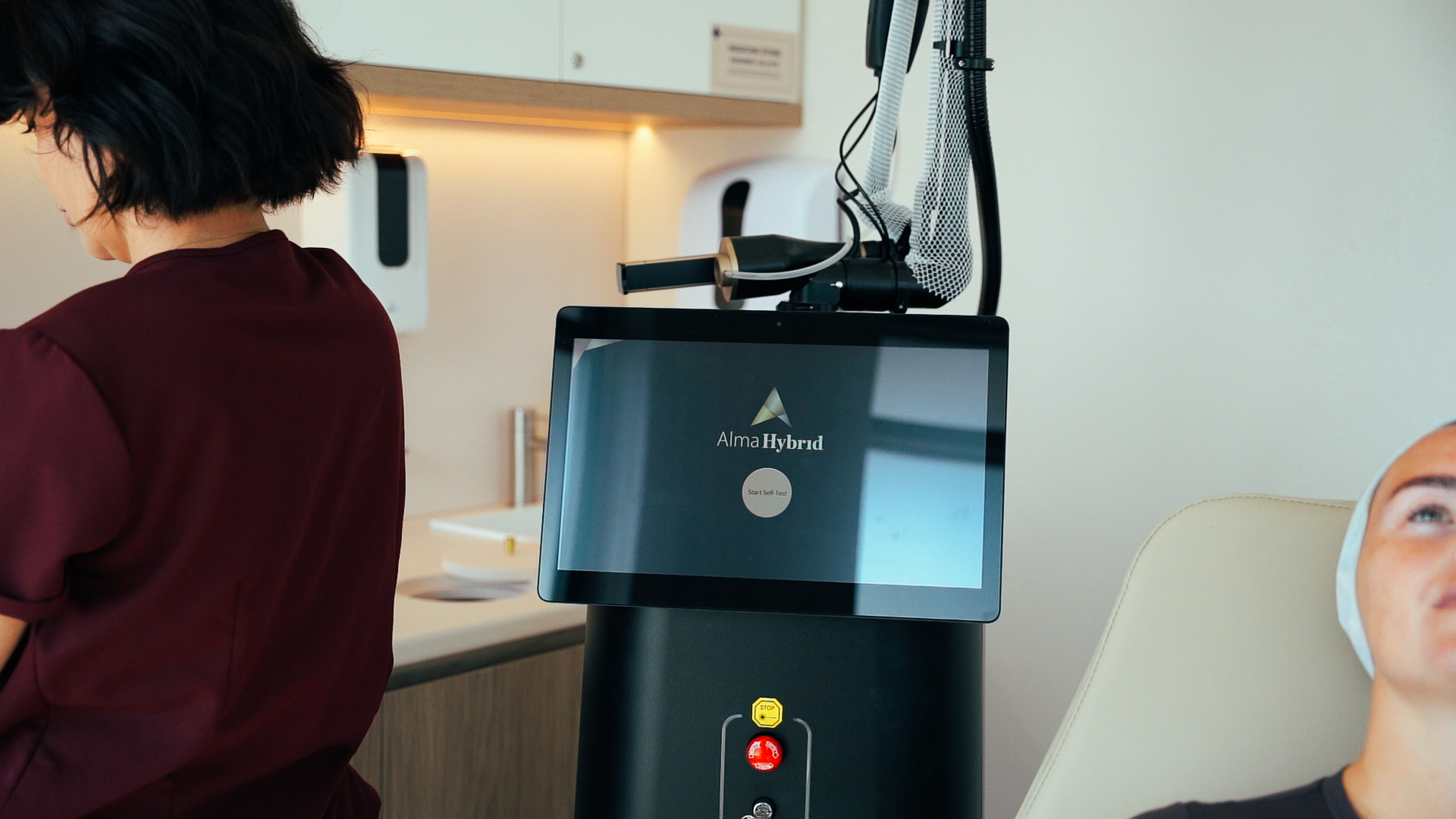
Scars from surgery, acne or injury are a normal part of healing. How a scar looks a year from now depends on what happens in the skin over the months that follow, and that is where treatment can help. At Sisä Skincare in Freshwater, our Registered Nurses treat scarring with the Alma Hybrid, a fractional laser that pairs ablative CO2 with a non-ablative 1570nm wavelength, alongside Rejuran and LED.
Understanding skin scarring
When skin is injured, the body lays down new collagen to close the wound. That repair collagen forms quickly and is less organised than the skin around it, which is why a scar can differ in colour, height or texture. A scar does not stop changing once the wound closes. It keeps remodelling for 12 to 18 months after surgery or injury.
- Atrophic scars sit below the surface as dips or pits, and are common after acne.
- Hypertrophic scars are raised but stay within the edges of the original wound.
- Keloid scars are raised and grow beyond the original wound. Active keloid scars need specialist assessment before any laser treatment.
How fractional ablative laser works
The Alma Hybrid’s CO2 wavelength (10,600nm) creates thousands of microscopic treatment columns in the skin, leaving the skin between them untouched. Because each column is surrounded by intact skin, healing starts from every side at once. This is what makes fractional treatment different from older laser resurfacing, which removed the whole surface.
Each column also sets off a fresh wound healing response. The skin breaks down old, disorganised scar collagen and replaces it with new collagen laid down in a more even pattern.
The second wavelength, 1570nm, is non-ablative. It heats tissue below the surface without removing skin, adding to the collagen response in the deeper layers.
Collagen keeps remodelling for three to six months after each session, so change builds gradually rather than all at once.
What the research shows
- Timing: starting fractional CO2 within a month of surgery gave better scar outcomes than starting later, and two to three or more sessions worked best (Ji et al, 2025).
- Collagen: tissue samples taken after fractional CO2 showed the collagen inside the scar had been remodelled (Keshk et al, 2025).
- Scar scores: in one study, Vancouver Scar Scale scores improved from 5.33 to 2.55 after three sessions started around four weeks after surgery (Ibrahim et al, 2019).
- Healing: skin treated with LED after ablative laser healed faster (Soliman et al, 2024).
- Combination: pairing PDRN with fractional CO2 improved scar volume and width more than the other approaches in that study (Thanasarnaksorn et al, 2025).
New scars and established scars
For surgical scars, timing matters. Your surgeon’s go-ahead comes first. Once the wound has closed, treatment can begin from around four weeks if it suits you, while the scar is still actively remodelling.
Established scars can be treated too. The collagen in an older scar is more settled, so the plan usually involves a course of sessions spaced to allow remodelling between them.
Treatments we pair with laser
Rejuran Bioremodeller is an injectable containing polynucleotides (PDRN), which support the skin’s own repair processes. It can be used on its own for shallow acne scarring, or alongside laser as part of a scar plan.
Lutronic Healite II LED uses light to support healing after laser. It is included in the Alma Hybrid package, with sessions on day two and day four after treatment.
What to expect
Expect 7 to 14 days of downtime depending on treatment intensity, with redness, swelling and crusting as the skin heals. You leave with a written aftercare plan, and sun protection is part of every stage. The number of sessions depends on the scar, its age and your skin.
Is it right for you?
Every scar is different, so the first step is an assessment. A skin consult is 30 minutes with a clinician, $50, and includes an Observ 520 skin analysis. You leave with a digital treatment plan, with timelines and pricing, saved to your personal Sisä profile. Laser suitability is assessed by our Registered Nurses before any treatment.
Alma Hybrid is a higher-risk non-surgical cosmetic procedure. A suitability assessment is required. Performed by Registered Nurses under medical oversight. Individual results vary. This article is general information and not medical advice.
References
- Ji Q et al. J Cosmet Dermatol. 2025. PMID 39780524
- Keshk ZS et al. Lasers Med Sci. 2025. PMID 40069407
- Ibrahim SM et al. Clin Cosmet Investig Dermatol. 2019. DOI 10.2147/CCID.S177622
- Soliman J et al. Lasers Med Sci. 2024. PMID 38532146
- Thanasarnaksorn W et al. Arch Dermatol Res. 2025. DOI 10.1007/s00403-025-04348-y